
I had been looking forward to a quiet moment away from slaying giant wyverns, just me, my fishing rod, and the tranquil waters of the Scarlet Forest. Monster Hunter Wilds offers this simple pleasure: spot a body of water, aim your cast near a shadowy silhouette, and wait for a bite. But in early 2026, after one too many graphics driver updates and a persistent belief that my RTX 5090 deserved to flex every setting, I stumbled into a frustratingly beautiful problem. The reflections on the water’s surface acted like a liquid mercury mirror, trapping every leaf and sunbeam above while completely entombing the fish below in a silver blindness. I could no longer see the fish; I could only guess where they were, casting blind like a man trying to read braille through a raging kaleidoscope.
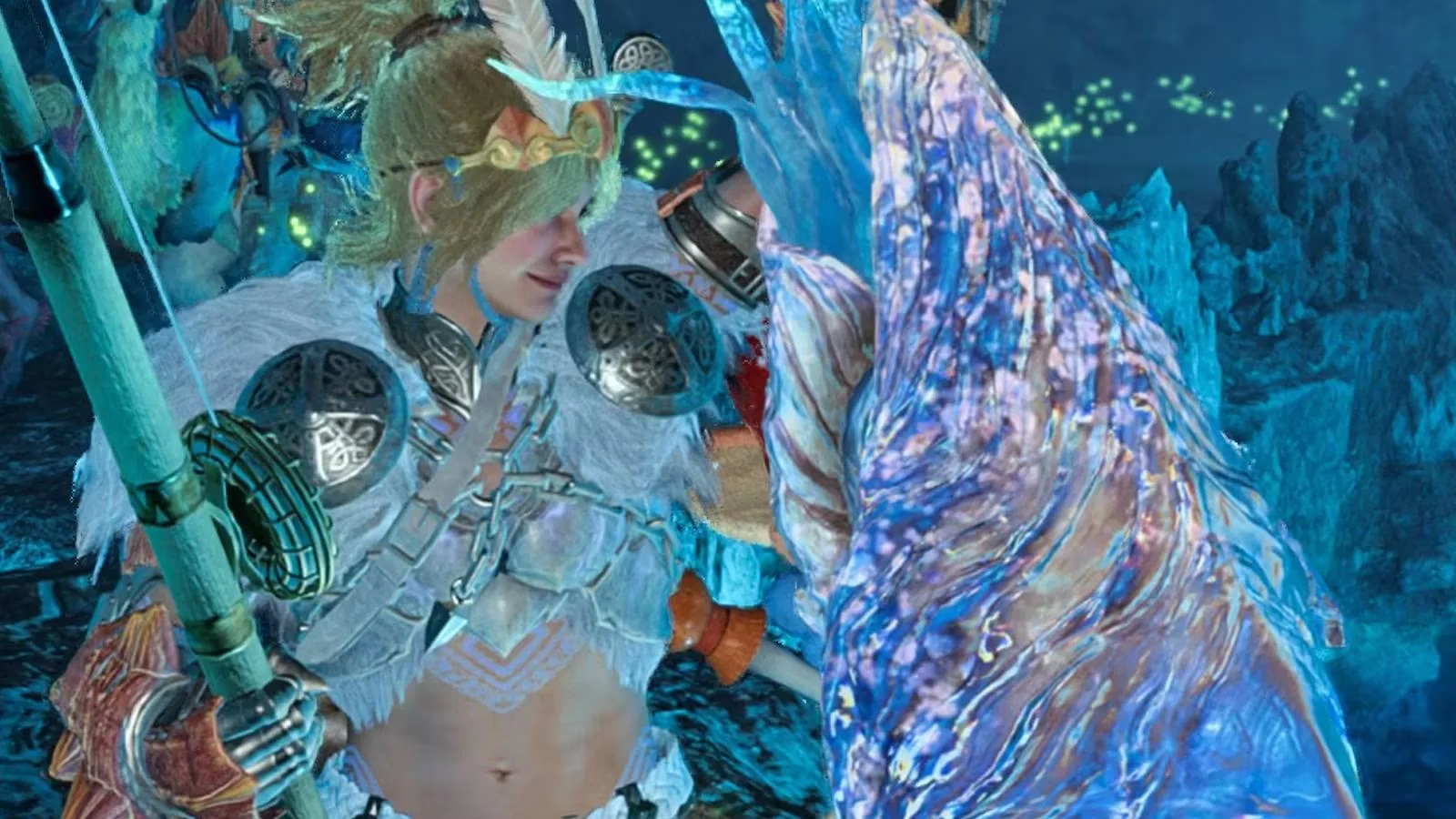
The root of this ocular chaos is ray-tracing. When enabled, the game’s water becomes a churning sheet of glossy perfection—realistic to a fault. In nature, heavy sediment and turbidity in a swampy forest stream would naturally mute reflections, but Wilds with RTX cranked up ignores that organic haze, insisting on painting every puddle as a pristine mirror. The irony is as thick as the mud the game fails to render: the visually enhanced water becomes a wall. Fish, those little pixelated proteins, turn into ghosts shivering under a sheet of quicksilver. I found myself squinting, tilting the camera, even physically leaning sideways in my chair, all to no avail.
Lowering the RTX quality settings, by the way, is like handing a pair of scratched sunglasses to a man staring at the sun. I tried every preset, from “Low” to “Ultra.” At the highest tier, the water transformed into a smeared oil painting, the kind where the artist used a palette knife with too much enthusiasm. The reflections didn’t just hide the fish; they actively distracted my eyes, pulling my focus to a wobbling, pointless light show. At lower settings, the problem persisted—the fish remained veiled. Community whisperers on hunter hubs have confirmed the same. One user with a rig sporting an RTX 5090 bluntly stated that ray-tracing in Wilds “f**s up lighting” and does nothing meaningful besides gut the framerate like a captured Aptonoth. The game’s reputation for performance hiccups on PC is already legend, and this is just another log on a bonfire that won’t stop burning.
The only genuine solution is to neuter the visuals entirely: turn off ray-tracing. Doing so felt like ripping curtains off a window during a thunderstorm—suddenly, I could see the aquatic world clearly, every fin and ripple. The water lost its hyper-reflective arrogance and returned to a humble transparency, exactly what a turbid ecosystem demands. In that moment, I realized I had been building my fishing experience on a scaffold made of wet cardboard; removing the flashy instability collapsed nothing of true value. The game didn’t need those expansive reflections; its own design language in places like the small desert oasis emphasizes clarity and the depths beneath, not a mirror surface stolen from a luxury bathroom.
Yet the trouble extends beyond a single hobby minigame. This reflection issue is a microcosm of a broader affliction in modern gaming: the relentless pursuit of graphical grandeur that occasionally blinds us to foolhardy design. It’s like seasoning a dish with edible gold leaf only to forget the salt. In Wilds, ray-tracing currently stands as a ghost light, a technical actor that walks on stage, confuses the audience with unnecessary brilliance, and then trips over its own cables. For an activity meant to be a calm respite between hunts, fishing under the ray-tracing curse becomes a trial of patience I’d rather not endure. So here I am, ray-tracing off, bagging Gastronome Tuna by the dozen, and watching the sunset glint off water that actually makes sense. The moral? Sometimes, to see what you’re hunting, you have to accept a world that’s less shiny and far more honest.