
It finally happened. After a decade of silence and a whopping 15 years since its last proper console appearance, the sea-dwelling lightning rod known as Lagiacrus has slithered its way into Monster Hunter Wilds. The summer of 2025 brought Title Update 2, and with it, the revival of a leviathan that once defined an entire generation of hunters. For veterans who cut their teeth on the Wii’s Monster Hunter Tri, this is less of a content drop and more of a homecoming—complete with electrified scales, a cobra-like hood, and a chip on its shoulder the size of the Scarlet Forest.
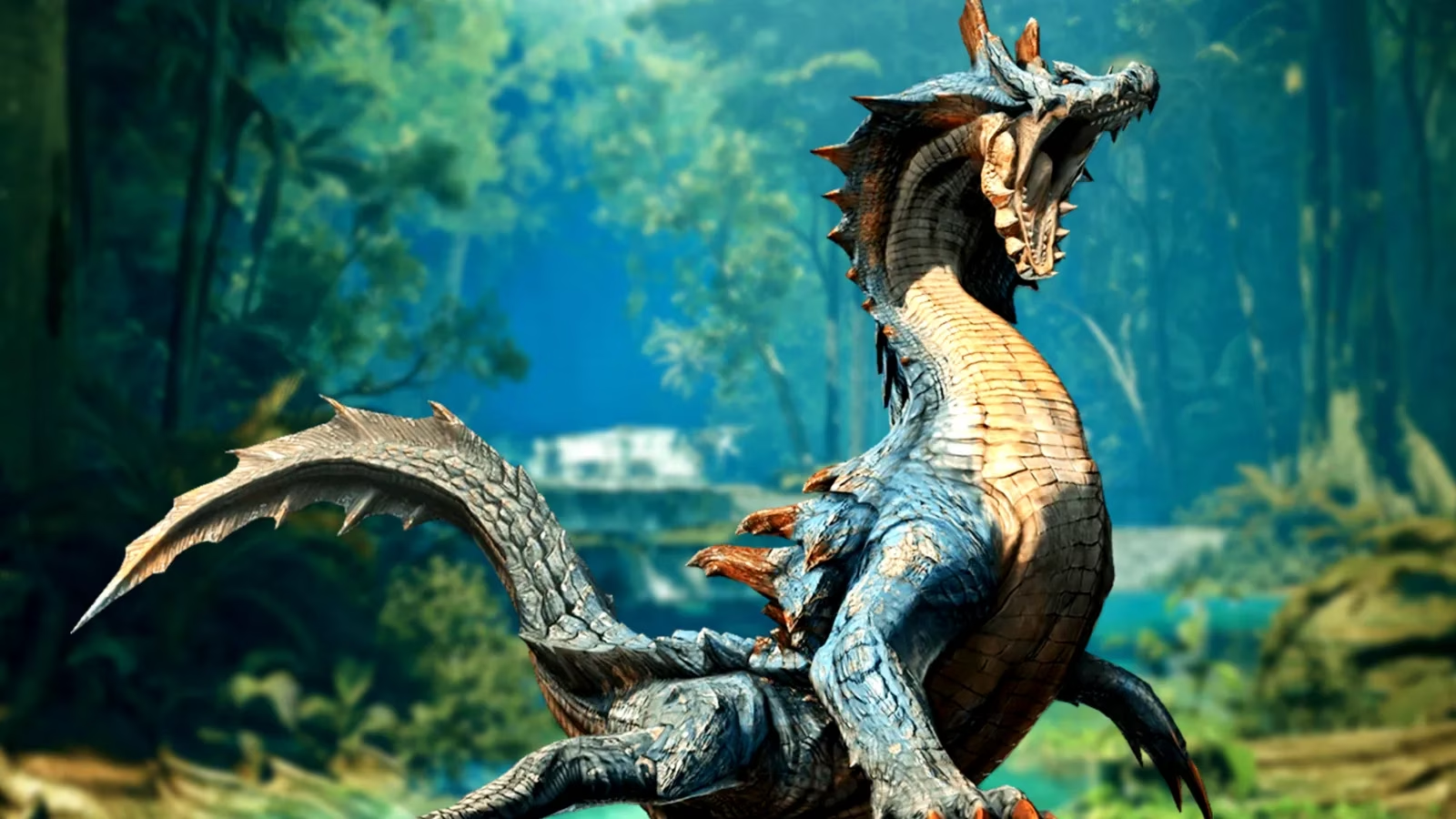
Lagiacrus was never just another monster. It was the flagship beast of Tri, the one and only Monster Hunter title brave (or reckless) enough to throw hunters into the deep end—literally. Underwater combat was the game’s big gimmick, and Lagiacrus swam through those murky depths like a caffeinated eel crossed with a thunderstorm. The fight demanded spatial awareness most players didn’t possess, turning early encounters into panicked scrambles for air bubbles and frantic prayers to whatever deity watches over drowned hunters. Despite the clunkiness of aquatic brawling, or perhaps because of the sheer spectacle, Lagiacrus clawed its way to third place in the franchise’s official 20th-anniversary popularity poll—above flashier newcomers and even some elder dragons. That kind of staying power isn’t earned by being forgettable.
What makes this return so juicy is the redesign challenge it posed to Capcom. Lagiacrus’s original moveset was married to water. Remove the swimming, and you risk gutting the fight into a half-empty platter of land-based tail swipes and telegraphed shock orbs. The 3DS title Monster Hunter Generations already tried that compromise, and while it was functional, it felt like watching a shark attempt ballet on a sandy beach. Nobody wanted a repeat of that. This time, the developers had to reimagine a monster built for three-dimensional fluid movement and make it work on solid ground without losing its identity.
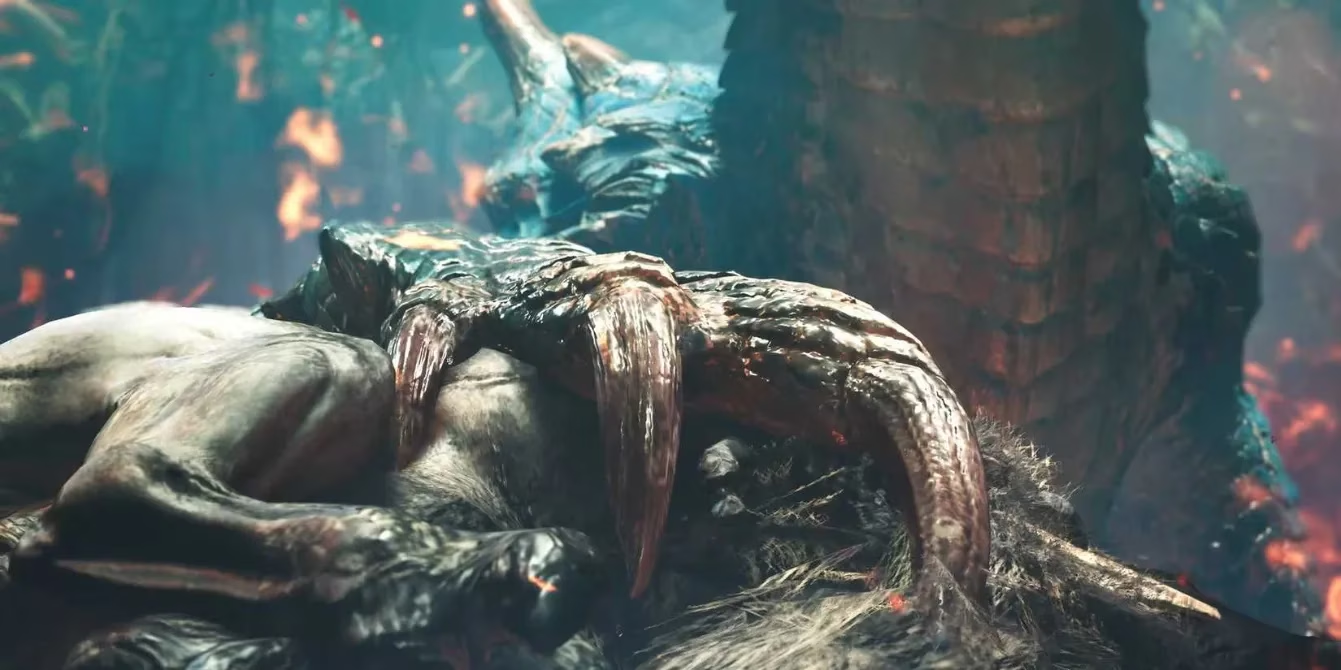
Enter Uth Duna—the apex leviathan of the Scarlet Forest—which served as the perfect proof of concept. Before Lagiacrus ever showed its face, Wilds had already demonstrated that a fish-adjacent monster could thrive on land by weaving water-based attacks into its repertoire without needing a full underwater arena. Uth Duna’s belly-flops, wave-creating slams, and slick retreats paved the way for what Lagiacrus could become: a thunderous god of the wetlands that controls the battlefield with electrified puddles, sweeping electrical arcs, and charges that send hunters skidding across the mud. The revamped fight leans into terrain manipulation. Lagiacrus now crackles with ambient energy, supercharging waterlogged ground into lethal shock zones. It darts between pools with a serpentine fluidity that echoes its aquatic roots, all while snapping at hunters with that unmistakable hood flared.
The nostalgia factor is off the charts, but it’s not just about warm fuzzies. Many Western players first discovered Monster Hunter via Tri on the Wii, its iconic cover art staring down a Lagiacrus silhouette right into their souls. That image sold the fantasy of tackling a mythical sea wyvern. For a lot of those hunters, Lagiacrus wasn’t just a monster—it was the monster that got away. A surprising number of veterans openly admit they never actually defeated Lagiacrus back in 2009. The combination of janky underwater controls, limited oxygen, and raw adolescent frustration created a boss that became a white whale. Now, 15 years later, those same players are coming back with adult reflexes, proper gear loadouts, and a decade-plus chip on their shoulder. Watching someone finally settle a score that spanned three console generations is pure comedy gold—and deeply satisfying.
Mechanically, Lagiacrus slots into Wilds’ ecosystem as a mid-to-high-tier challenge that sits neatly alongside the game’s other heavy hitters. It doesn’t rely on elder dragon status to feel threatening. Instead, it uses speed, AoE burst damage, and an aggressive tempo that punishes greedy combos. The armor set naturally became an instant fashion favorite, with the signature glowing scales and sleek aquatic motifs that make hunters look like they’re ready to star in a cyberpunk sea shanty. The weapons carry thunder element with decent sharpness, making them solid picks for toppling the game’s numerous water-weak monsters.
If there’s one minor gripe, it’s that the fight can feel a touch too predictable once hunters learn the safe zones around its charged states. But that predictability rarely undermines the sheer spectacle. Between the crackling lightning, the dramatic flourishes, and the redesigned signature moves, Lagiacrus in Wilds is less a simple revival and more of a gold-plated apology for a decade of absence. Capcom clearly understood that bringing back such an iconic foe meant treating it with reverence while also giving it the modernization it deserved.
Ultimately, Lagiacrus’s return isn’t just a bullet point on a patch note. It’s a love letter wrapped in thunder. For veteran hunters, it’s closure. For newcomers, it’s a masterclass in how to make a legacy monster feel fresh without betraying its roots. And for everyone else? It’s just a really, really good reason to never stand in a puddle again.