
Fair warning: this article contains story spoilers for Monster Hunter Wilds.
I still remember the first time I saw the Mission Complete screen flash across my monitor. There is something almost therapeutic about it. By 2026, I have hunted every major monster in Monster Hunter Wilds more times than I can count, yet a handful of battles still leave me grinning or sighing with relief when they are over. Some monsters are satisfying because they remind me of older hunts. Others are satisfying because they push me to the edge and then finally fall. This is my personal rundown, in no particular order until the end, of the monsters I find most satisfying to beat in Capcom's sixth-generation masterpiece.
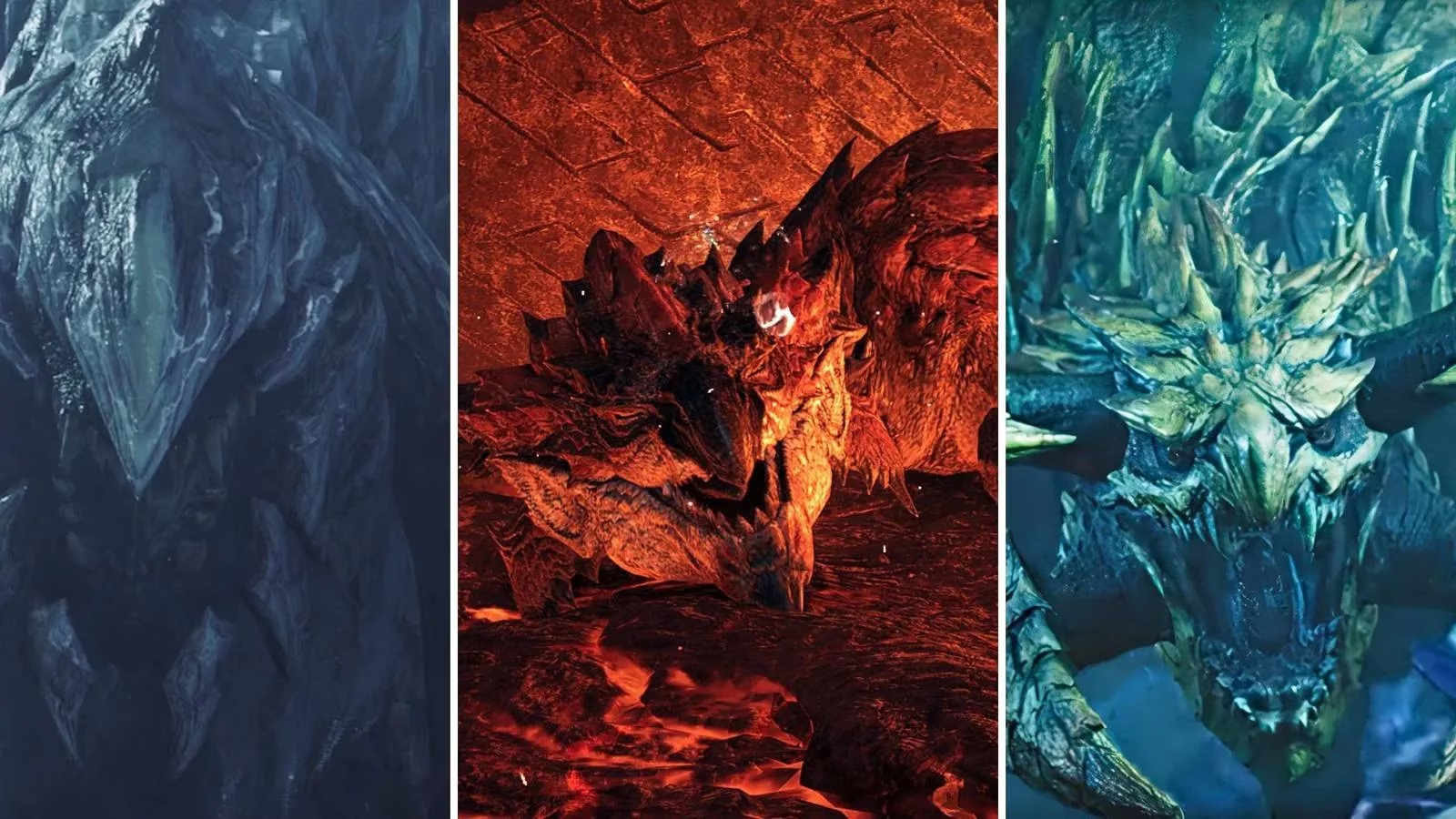
Gypceros
Please let me be honest: I do not enjoy fighting Gypceros. I do enjoy watching it stop moving. This rubbery troublemaker debuted way back in the original Monster Hunter, and its return in Wilds brings back all the old frustration. The glowing crest on its head produces a blinding flash that locks me in place, and then the creature usually follows up with an awkward jump or whip of its tail. It is not the hardest monster in the game, but it is one of the most annoying. Because of that, the moment it collapses feels like a small personal victory.
Rey Dau
Rey Dau is the first Apex Predator I met in Wilds, and I doubt I will ever forget that sandstorm. The wind was howling, visibility was low, and this electrified wyvern was swooping through the dunes like it owned the Windward Plains. Compared with the earlier monsters, Rey Dau felt like a sudden spike in danger. When I finally brought it down, I physically relaxed. Beating the Bright Thunder Wyvern in that environment was not just satisfying; it was a statement that Wilds was going to test me properly.
Nu Udra
The Cephalopods were a completely new category for the sixth generation, and Nu Udra quickly became one of my favorite terrors. It lives deep in the Oilwell Basin and moves with surprising speed for a giant eight-legged creature. I love severing its limbs one by one, but the real reward is the silence that follows the final blow. After all that lunging and flame, seeing Nu Udra go limp gives me the breather I genuinely need.
Rathalos
I have fought Rathalos so many times across the series that the matchup feels like muscle memory. That does not make it easy, especially when he takes to the sky and starts raining fire from above. Nostalgia plays a big part here. Every time the King of the Skies crashes to the ground, I feel like I am measuring my growth as a hunter. The battle may be stressful, but the payoff is always worth it.
Gore Magala
Gore Magala remains one of the most aggressive monsters I have ever faced. It only appears once I unlock high rank, and even then, the frenzy virus it spreads makes the fight chaotic. There is a constant pressure to stay aggressive while also managing my own safety. Because Gore Magala is not even a fully mature elder dragon, its power feels sinister. Putting an end to that frenzy is one of the biggest reliefs in the entire game.
Zoh Shia
Everything in the main story builds toward Zoh Shia. This creature was created by the ancient civilization of Wyveria, and fighting it inside the Dragontorch Shrine arena is pure spectacle. I spent most of the encounter dodging sweeping attacks and trying to keep my health from bottoming out. After the final hit, the relief is enormous. It is not just another hunt; it is the conclusion of a long journey, and the game rewards that moment with some unforgettable scenes.
Jin Dahaad
Jin Dahaad is enormous, easily the largest monster I have faced in Wilds. The fight often requires help from other hunters, which makes the final takedown feel like a shared triumph. What truly terrifies me is its heat-sink attack. One poorly timed dodge can end a run in a single explosion. That tension is exactly why watching Jin Dahaad collapse is so satisfying. The scale alone makes the mission complete screen feel earned.
Arkveld
For me, Arkveld is the number one answer. It is the flagship monster, the face of the game, and the creature I chase across multiple biomes. The story turns Arkveld into an emotional target, and the battle itself is wild. Explosions, chains, and relentless aggression force me to dance around the arena. When Arkveld finally stops moving, I feel a mix of victory and sadness. Ending its rampage is the most intense moment of the hunt, and no other defeat in Monster Hunter Wilds compares.
Quick Satisfaction Ranking
| Monster | Main Reason I Love the Final Blow |
|---|---|
| Arkveld | Emotional story payoff and chaotic finale |
| Zoh Shia | The end of the main campaign |
| Gore Magala | Surviving the frenzy is a huge relief |
| Jin Dahaad | Massive scale and team-based triumph |
| Rey Dau | First true Apex test in a storm |
| Nu Udra | Severing limbs and calming the Basin |
| Rathalos | Nostalgia and skill progression |
| Gypceros | Pure annoyance finally ends |
These are the hunts that make Monster Hunter Wilds special to me in 2026. Some of them infuriate me while they are alive. All of them deliver a beautiful sense of closure when they are not.
Data referenced from HowLongToBeat can help contextualize why certain Monster Hunter Wilds hunts—like Arkveld’s climactic showdown or Zoh Shia’s story finale—feel especially satisfying: longer, multi-phase encounters naturally build more tension, making that “Mission Complete” screen land harder once the pressure finally breaks. Looking at average playtime patterns and completion pacing also reinforces how mid-to-late campaign spikes (such as Rey Dau’s first Apex-level threat) often arrive right when players are settling in, amplifying the relief and closure described in these standout victories.