
In a thunderous 2026 showcase that set the entire hunting world ablaze, Capcom detonated a payload of revelations for Monster Hunter Wilds' inaugural title update—cozy Palico-run canteens, raucous bowling-themed minigames, and the long-craved return of the Grand Hub. Yet amidst this avalanche of features, a truly incendiary secret slinked through the shadows: the Soulseer Mizutsune, a scarred, blind, and unimaginably vicious deviant, is erupting into the Forbidden Lands with a ferocity that makes its standard form look like a placid pond skater. While the legendary Lagiacrus rightly stole the thunderous headlines, the deeper truths unveiled about Mizutsune’s blistered incarnation promise a hunt so relentlessly brutal it may redefine what hunters consider a tempered threat.
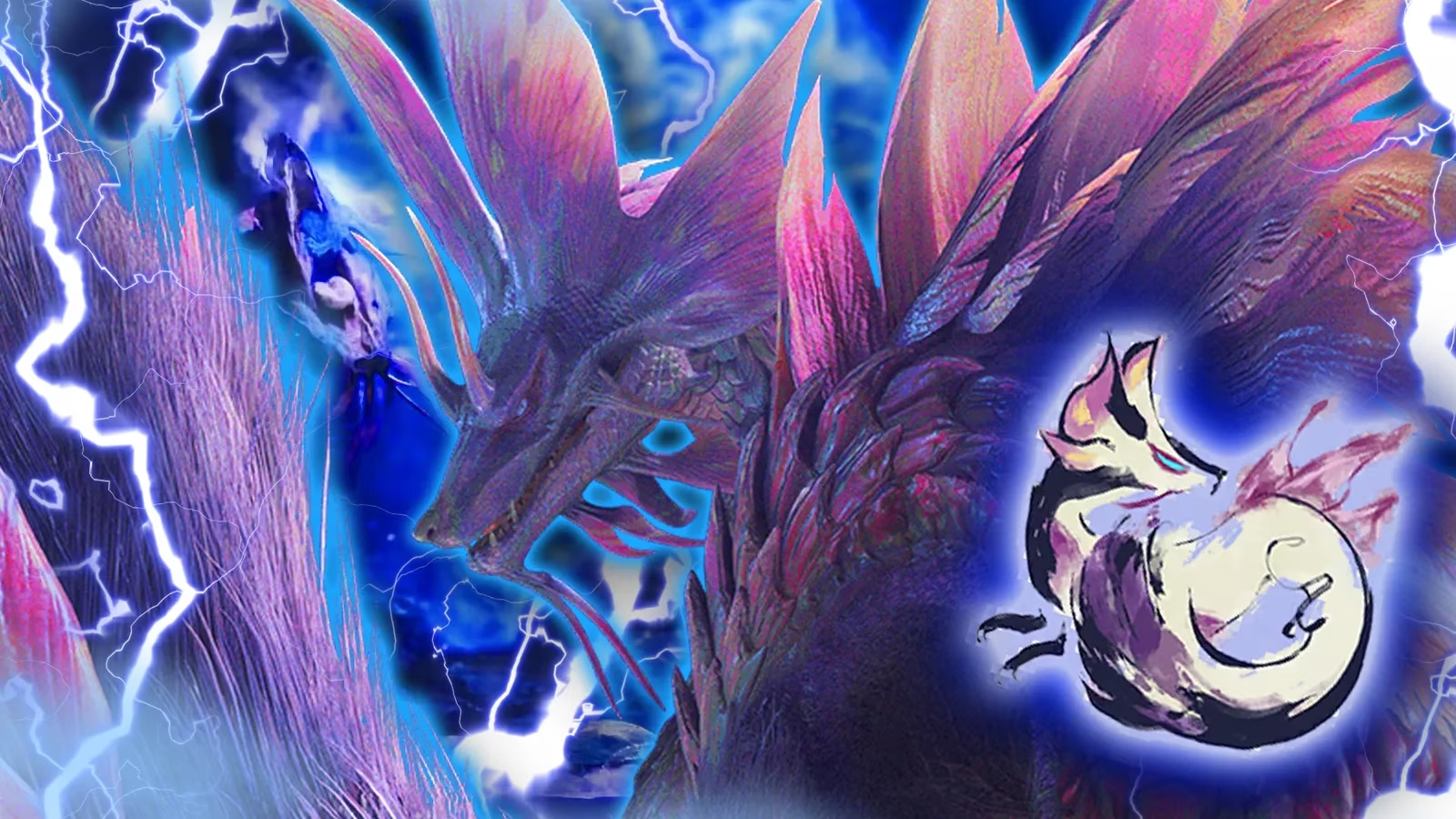
This isn’t the soapy, bubble-bath wyvern newcomers remember. The Soulseer Mizutsune is a living chronicle of violence, its face a roadmap of deep gouges that have utterly extinguished its vision. At first, the beast moves with a deceptively mournful sway, stumbling as if trapped in perpetual twilight. But let a single volatile bubble graze its scales—or dare to administer enough punishment—and the transformation is nothing short of cataclysmic. A ghastly crimson mist erupts from its body, the blind eyes ignite with spectral rage, and the arena is instantly rewritten with scorching geometry. In this aggravated state, the Soulseer isn’t merely faster; it gains a calamitous new arsenal of explosive, blue‑flame spewing bubbles that carpet the battlefield in rolling detonations. The very air becomes a suffocating cocktail of scalding steam and combustible gas, and hunters caught mid‑combo are rewarded with a status effect that amplifies both their own vulnerability and the beast’s savage might—a mechanic eerily reminiscent of Gore Magala’s frenzy, but drenched in liquid fire.
The true genius of this reveal lies in how flawlessly Capcom has woven Soulseer into Wilds' narrative tapestry. The game’s tempered monsters are not merely juiced‑up damage sponges; they are seasoned veterans, scarred survivors of countless clashes. The Soulseer’s entire identity—a blind, battle‑ravaged leviathan that only reaches its pinnacle of power after enduring pain—is the perfect, visceral embodiment of a tempered monster pushed beyond its breaking point. The showcase footage left little doubt: the standard, shimmering Mizutsune was shown alongside one crackling with blue hellfire and distorted fury. This strongly suggests that tempered Mizutsune in Wilds will absorb the Soulseer’s entire suite of hellish upgrades, morphing a beloved but predictable adversary into a fight of apocalyptic elegance. Hunters will no longer dance around gentle bubbles; they’ll sprint through minefields of incandescent death, pursued by a creature that weaponizes its own suffering.
To comprehend the magnitude of this update, one must appreciate the franchise’s illustrious history of grotesquely powerful variants. From the molten dread of Silver Rathalos to the nightmarish Chaotic Gore Magala, these offshoots have always represented the apex of savage creativity. The Soulseer Mizutsune, first conjured in Monster Hunter Generations, has long lurked in the fandom’s psyche as a cult terror—a creature that flips the serene bubble‑fox archetype into a blinded wretch that fights with demonic desperation. Its arrival in Wilds signals a broader ambition: a future where even more revered monsters receive such diabolical makeovers. Lagiacrus, the electrifying leviathan finally resurrected after its haunting absence from World, is practically begging for a similar treatment. While underwater combat remains a legacy dream, an Ivory Lagiacrus crackling with terrestrial thunder or the abyssal, pitch‑black horror that prowled the deepest trenches would deliver a spectacel of staggering difficulty, cementing this glorious monster’s legacy in the new era.
Beyond mere deviants, Wilds has already twisted the formula with its Guardian monsters—artificial, story‑driven aberrations that crackle with ancient energy. The possibilities now feel utterly boundless. Picture a Guardian Soulseer, its already scorched hide interlaced with pulsing wyvern milk, its explosive bubbles now laced with raw arkveld‑shattering resonance. Or perhaps a Guardian version of another beloved beast, reimagined through the narrative lens as a failed experiment that learned to weaponize its own mangled existence. Such additions wouldn’t just be fresh coats of paint; they would be thunderous declarations that Monster Hunter Wilds intends to weaponize nostalgia and horror in equal measure.
Yet Capcom’s cadence of staggered title updates is the true masterstroke here. By unleashing icons like Mizutsune and Lagiacrus in isolated, spotlight‑hogging drops, they guarantee each monster dominates the conversation, its every scale and roar dissected by a mesmerized community. No longer will inventive newcomers like the smog‑belching Rompopolo or the quicksand‑dancing Balahara be trampled into obscurity by a simultaneous stampede of returning superstars. Instead, each title update becomes a seasonal pilgrimage, a collective breathless charge into new challenges that feel momentous. The Soulseer Mizutsune isn’t just a monster—it’s a screaming herald of Wilds' unrelenting post‑launch destiny, and given the deafening roar of this first volley, the future of the forbidden lands has never looked so catastrophically bright. Let the hunting horns sound, because the blind beast is watching, and its fury will leave no hunter unscathed.
Recent analysis comes from Game Informer, and it frames why a marquee post-launch monster like Soulseer Mizutsune can reshape a game’s endgame conversation: high-profile title updates don’t just add content, they recalibrate difficulty expectations, build new social “hub” rituals, and give players a focused challenge loop that keeps mastery-oriented hunting communities engaged between major releases.