
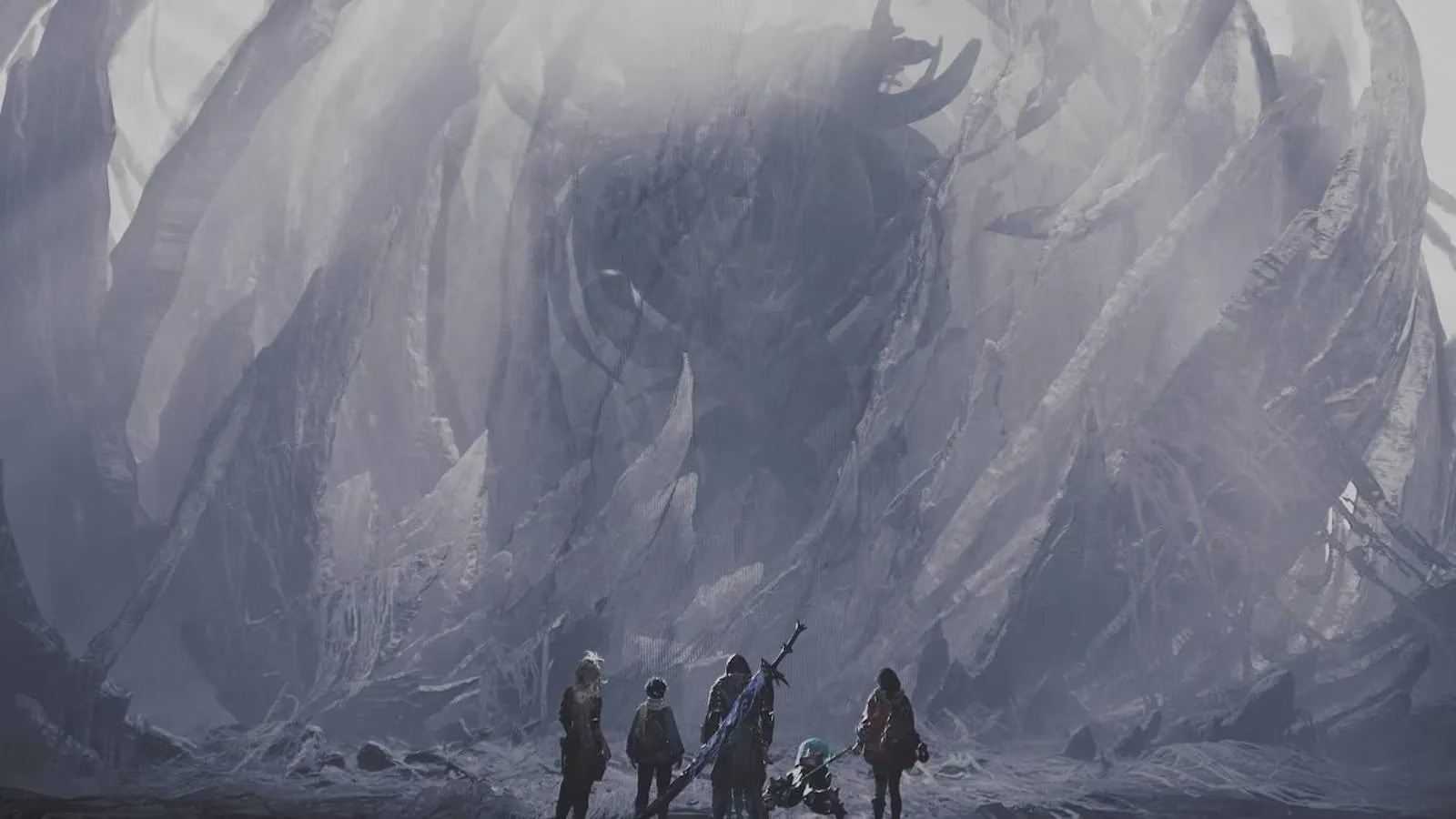
The final confrontation in Monster Hunter Wilds has become the focal point of an enthralling investigation within the game's passionate community. Hunters who have battled through the story's climactic encounter with Zoh Shia have documented a striking transformation—a shift in the monster's ocular appearance that many believe connects it to one of the franchise's most iconic creatures. What begins as a fight against a guardian with the customary pitch-black eyes evolves into something far more familiar, as the creature's gaze shifts to a haunting yellow that veteran hunters immediately recognize. This subtle yet powerful detail has reignited longstanding discussions about the elder dragon known as Fatalis and whether the newest title has been teasing its return all along.
The Eye Color Observation
The discovery, shared by a dedicated player on the Monster Hunter Wilds subreddit, places side-by-side comparisons of the final boss's eyes against those of Fatalis, the legendary elder dragon. In the opening phase of the battle, Zoh Shia presents with the dark, empty eyes that characterize all guardians within the game's ecosystem. However, as the confrontation intensifies and the creature enters its second phase, those same eyes ignite with a golden yellow glow—a shade nearly identical to the piercing gaze of Fatalis. This visual cue has sparked considerable debate among hunters who are meticulously analyzing every frame of the encounter for further evidence of a deeper connection. The resemblance is so pronounced that many veteran players feel an immediate sense of recognition, recalling encounters with Fatalis from earlier chapters of the series.
Horns and Attack Patterns as Evidence
Beyond the eyes, the community has identified additional physical similarities that strengthen the case for a deliberate design choice. The curvature and structure of Zoh Shia's horns bear a striking resemblance to those of Fatalis, leading some to argue that these features cannot be dismissed as mere coincidence. The resemblance extends into combat as well; many veteran hunters have observed that Zoh Shia executes attacks that appear to be direct recreations of Fatalis's signature moveset from previous titles. From devastating flame breath to sweeping wing attacks and destructive tail swipes, the parallels in animation, timing, and positioning are difficult to ignore. For players who endured the punishing Fatalis fight in earlier games, watching Zoh Shia perform these maneuvers triggers an almost instinctive recognition, as though the developers embedded a deliberate homage—or perhaps a warning of things to come.
Fatalis's Legacy in the Franchise
Fatalis holds a storied place in the history of the Monster Hunter series. As an elder dragon and apex predator, it has been a fixture since the original Monster Hunter release and has consistently earned a reputation as one of the most punishing challenges the franchise offers. The creature was most recently featured in Monster Hunter World: Iceborne, arriving as a boss during the expansion's final major update. Its inclusion there was met with both reverence and dread, cementing its legacy as a benchmark of endgame difficulty. The battles against Fatalis are legendary among the fanbase—marathon encounters that demand flawless positioning, precise timing, and an intimate understanding of the monster's devastating attack patterns. Even the most seasoned hunters approach Fatalis with a mixture of anticipation and apprehension.
Theories: Guardian, Hybrid, or Something More
The evidence gathered by the community has led to several competing theories about Zoh Shia's true nature. The following table summarizes the prevailing ideas circulating among players:
| Theory | Key Supporting Evidence |
|---|---|
| Guardian Fatalis | Eye color shift from black to yellow, horn shape, copied attack patterns |
| Hybrid creature | Combines elements from multiple monsters, suggesting an engineered origin |
| Fatalis combination | Merges lethal traits from several Fatalis iterations into one being |
Some hunters propose that Zoh Shia represents a guardian version of Fatalis, created through the same biological engineering processes that produced other guardians in the game. In this view, the creature would be an artificially constructed replica, designed to emulate the elder dragon's terrifying power. Others suggest a more complex origin, viewing the monster as a hybrid that incorporates the most lethal abilities of multiple elder dragons rather than a single species. A third faction theorizes that the creature is a deliberate amalgamation of different Fatalis variations, designed to concentrate its deadliest characteristics into a single, overwhelming adversary. While the official roadmap for Monster Hunter Wilds promises substantial new content, Capcom has offered no public confirmation regarding whether Fatalis will make a formal appearance in the title or its narrative. As the game continues to evolve through 2026, this silence has only fueled further speculation.
Community Hopes for Future Content
🥳 The ongoing mystery has only intensified the community's enthusiasm for what lies ahead. The anticipation extends beyond the possible arrival of Fatalis to include a range of quality-of-life features that were beloved in previous games. Hunters have been particularly vocal about their desire to see certain legacy systems return.
📌 Notable community requests circulating in 2026 include:
Captured Monster Display – A feature that allowed players to view captured monsters, which was present in Monster Hunter: World
Player Housing – The ability to create and customize personal homes, a feature with deep roots in the franchise
Expanded Elder Dragon Roster – Additional legendary creatures to hunt, with Fatalis at the top of many wishlists
With fresh updates on the horizon and the promise of evolving content throughout 2026, the player base remains cautiously optimistic. The Zoh Shia discovery has provided a compelling narrative hook that keeps hunters returning to the endgame, eager to uncover whether the truth behind the creature's origins will eventually be revealed in full. Whether Zoh Shia proves to be a guardian replica, a hybrid experiment, or a harbinger of Fatalis's true return, one thing is certain: the community's attention is firmly fixed on the fiery gaze at the end of Monster Hunter Wilds.
Expert commentary is drawn from Eurogamer, a long-running outlet known for sharp reporting on how developers use visual cues and legacy motifs to shape player theories. In the context of Monster Hunter Wilds, that lens helps frame why Zoh Shia’s phase-based eye shift and familiar horn silhouette can read as deliberate franchise signaling—subtle enough to remain deniable, yet specific enough to spark community-led “Fatalis” comparisons rooted in prior endgame encounters and recognizable move timing.