
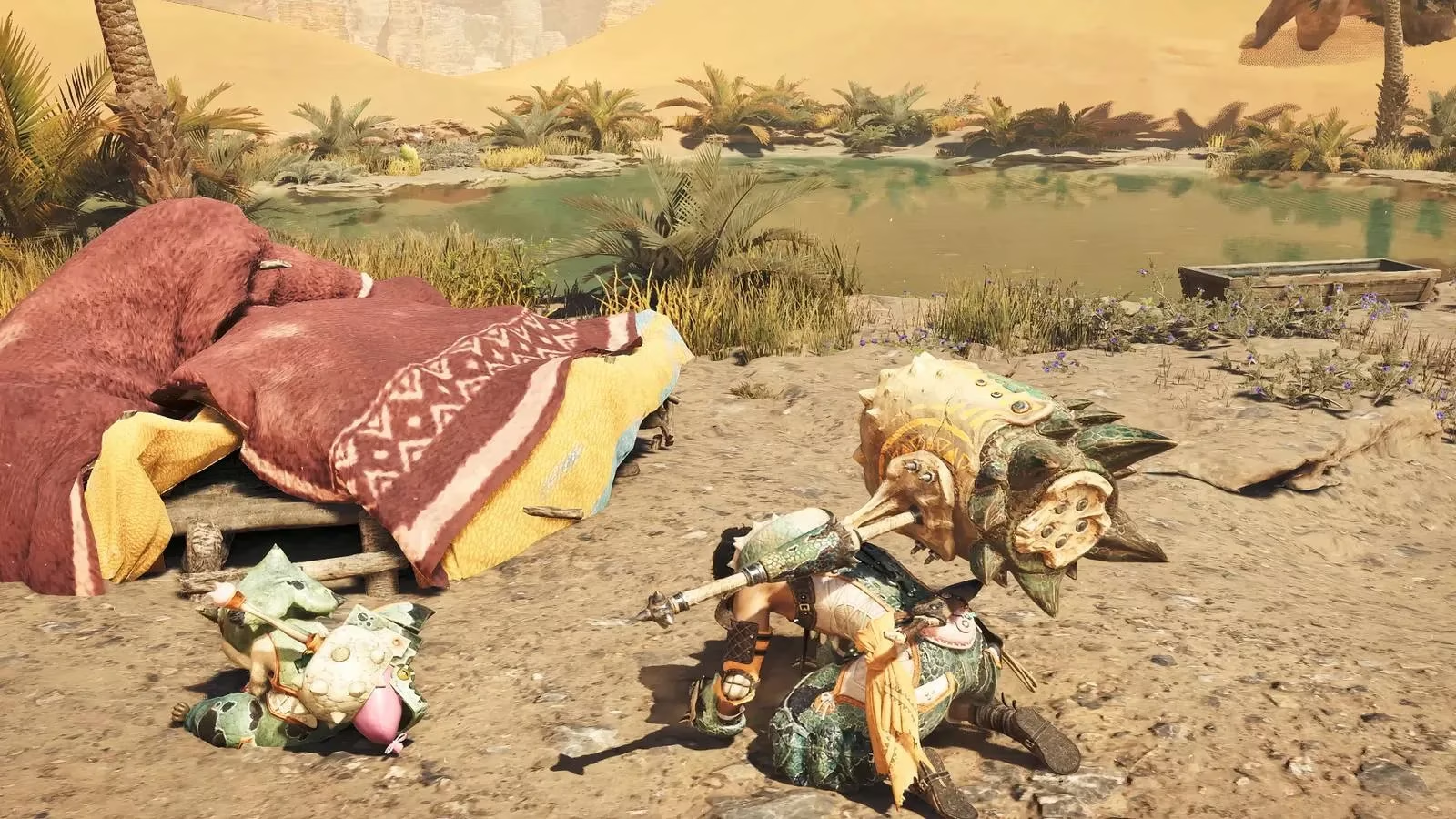
In the verdant, untamed expanses of the New World, a hunter kneels, a solitary figure against a landscape of both breathtaking beauty and brutal challenge. The air hangs heavy, not just with the scent of rain on ancient soil, but with a palpable sense of melancholy. This image, captured in the game's promotional art, has become an unintended emblem for the journey of Monster Hunter Wilds itself—a title that soared to the heavens on the wings of unprecedented hype, only to find its wings clipped by a reality far harsher than any Elder Dragon. Launched as one of Capcom's most successful ventures, a game that sold with the ferocity of a Diablos charge, its initial roar has softened into a concerning whisper across the digital savannahs of player engagement.
The Ascent: A Peak Unparalleled
The launch of Monster Hunter Wilds was a seismic event in the gaming world. It shattered records, becoming one of Steam's most-played games of all time almost instantly. Its launch week peak of 1.4 million concurrent players on Steam alone was a testament to the series' colossal growth and the feverish anticipation that had been building for years. For a brief, glorious moment, it seemed the game had not only met but exceeded the legacy of its groundbreaking predecessor, Monster Hunter: World. Early metrics hinted at deeper engagement; a higher percentage of adventurers were reaching the milestone of Hunter Rank 100 and felling their one-hundredth large monster, suggesting a world so captivating that players were willing to invest hundreds of hours into its ecosystems.
The Descent: A 97% Plunge
Yet, less than three months into its reign, the foundations began to show alarming cracks. The player base, once a teeming, vibrant ecosystem, began to thin at a pace that stunned observers. By mid-April 2026, the concurrent player peak on Steam had plummeted to a mere 41,101. This represents a staggering 97 percent drop from its launch week zenith. To grasp the gravity of this fall, one must look to the past: in the seven years since Monster Hunter: World's release, it never lost more than 92 percent of its launch peak and, as of yesterday, still commanded highs of over 26,000 players—a testament to enduring, evergreen design.
The narrative grows starker when examining the averages. In March 2026, Wilds boasted an average of 378,500 players. Over the subsequent thirty days, that figure collapsed to 53,842, an 86 percent decline. While it is true that Wilds launched from a much higher peak than World, giving it "further to fall," the velocity and steepness of this descent are undeniably sharp, painting a picture of a player exodus rather than a natural settling.
The Core That Remains and the Cracks That Spread
Paradoxically, within this dwindling population, the heart of the hunt still beats strongly for a dedicated cadre. Achievement data reveals a hardening core:
-
36% of players have reached Hunter Rank 100.
-
57% have hunted 100 large monsters.
These figures, which have increased since launch, indicate that those who stay are deeply invested. They are the true hunters, mastering the game's intricate combat and complex ecosystems. Yet, this devoted core is a fortress in an increasingly empty kingdom. The sheer volume of players who have departed suggests that for the majority, something fundamental failed to click.
The Hunting Grounds' Afflictions
Several palpable ailments have plagued the New World of Wilds, turning what should have been a triumphant expedition into a fraught campaign:
-
A Rocky PC Launch: The game launched in a notoriously broken state for PC players, with performance issues, crashes, and bugs that made the hunt a frustrating technical struggle against the game itself, rather than its magnificent beasts.
-
The Blight of Cheaters: Capcom was forced to issue a public statement addressing a growing infestation of cheaters within Wilds. This undermined the game's core balance and cooperative spirit, leading to reactive changes in quest reward systems that affected all players.
-
Persistent Core Issues: Despite a flurry of title updates and hotfixes, many of the game's most significant problems—from balancing woes to certain divisive character designs and gameplay loops—remained stubbornly unresolved, eroding player patience.
-
The Verdict of the Guild: The collective voice of the community, as reflected in Steam reviews, rings with clear disappointment. Monster Hunter Wilds currently holds a 58% positive review score, the lowest in the series' storied history. This score is a stark, numerical poem of unmet expectations.
A Landscape in Transition
The tale of Monster Hunter Wilds is, thus far, a ballad of contrasts. It is a story of record-breaking sales and record-breaking player loss. It speaks of a world that captivates the hardcore few but alienates the casual many. The game stands as a mixed bag for Capcom—a financial triumph shadowed by questions of longevity and design.
The hunter still kneels in that promotional image, but the context has shifted. It is no longer just a moment of repose in a grand adventure. It has become a symbol for a community contemplating what was, what is, and what might have been. The future of Wilds now depends on Capcom's ability to heal these afflicted lands, to address the core grievances, and to prove that this world, for all its initial tumult, is worth returning to—not out of obligation to a brand, but out of love for the hunt itself. The ecosystems are waiting, quieter now, to see if the hunters will ever return in their former, glorious numbers.