
I dove back into Monster Hunter Wilds the moment Title Update 1 hit, and I wasn't alone. Steamcharts lit up, guild halls filled, and the carving sound effects never felt so satisfying. But here's the thing: while I was eager to try the new content, one quiet little line in the patch notes made me grin the widest. Gore Magala got a camera fix, and finally—finally—it feels like the flag-worthy menace it was always meant to be.
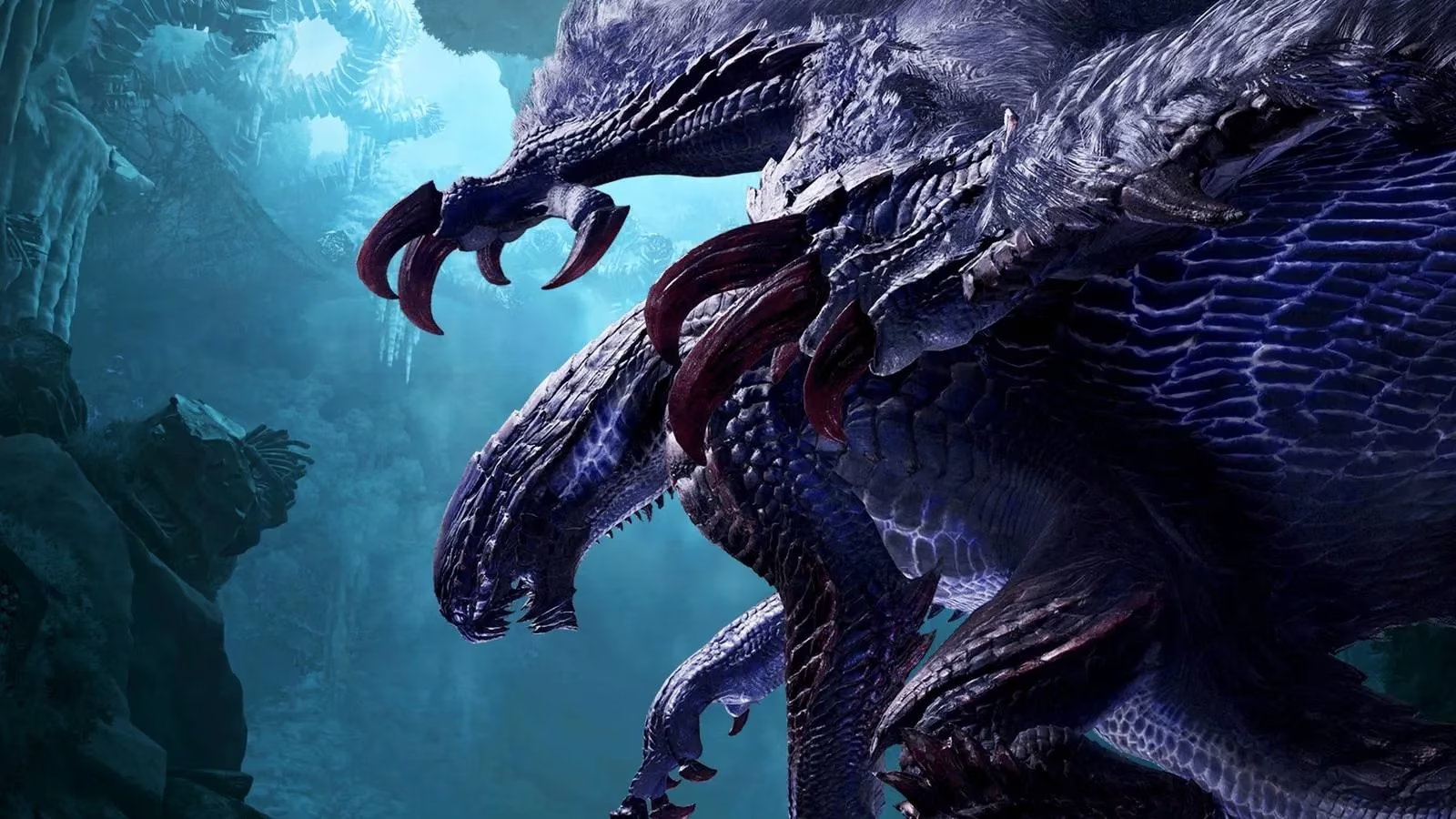
Let me take you back a bit. When Gore Magala first appeared in Wilds, I was thrilled. This shadowy demi-elder has always been one of the series' most memorable creatures—that sleek black carapace, the unsettling way its feelers twitch before it enters Frenzy mode, the sheer dramatic presence. But my excitement quickly curdled into frustration. The fight, more often than not, was less a hunt and more a battle with the game's camera. The Iceshard Cliffs, for all their haunting frozen-civilization beauty, squeezed Gore Magala into corridors and bridges that made the action feel like a chaotic jumble. Zone 10 was the worst—a tiny, crumbling bridge where this towering dragon seemed to love retreating. I'd be trying to read its wing-arm swipes, but the camera would clip straight into its model, leaving me staring at a gray blur while my health bar evaporated.
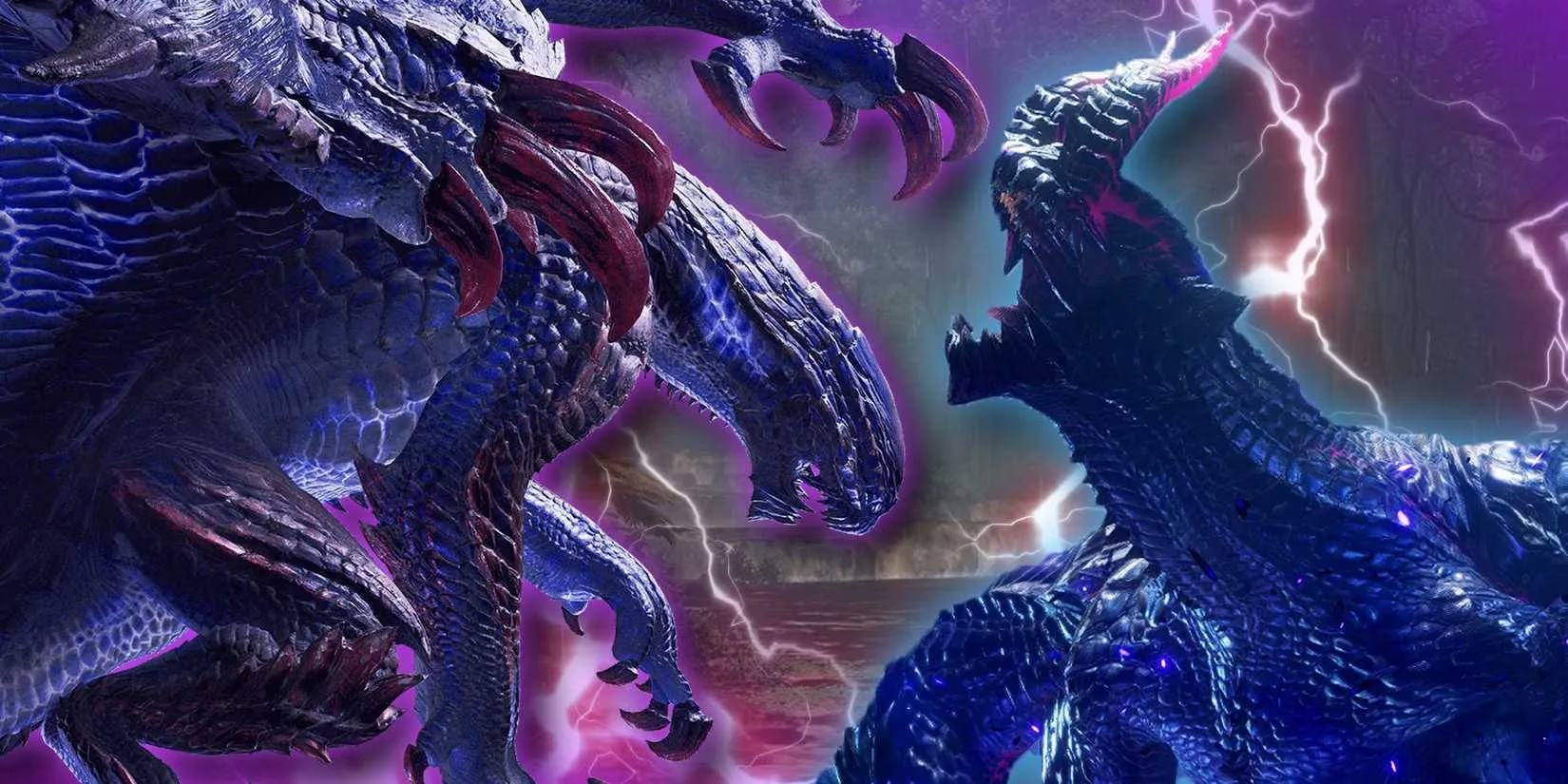
That camera quirk wasn't just annoying; it was a betrayal of the core Monster Hunter loop. In this series, combat is a deliberate dance. You don't have flashy dodge iframes out of the box like in a Souls game—you learn each monster's rhythm, you position yourself carefully, and you exploit openings after reading a tail swipe or a charging breath attack. That rhythm is the whole point, the reason we sink hundreds of hours into hunting. When the camera starts playing peek-a-boo inside a monster's ribcage, the entire illusion of mastery shatters. I couldn't tell you how many times I mistimed a dive because a wing-blade clipped into my view and hid the tell. It felt like the monster was fighting me with a cheap trick, not with its actual moveset.
And then, quietly, Capcom fixed it. The Version 1.010 update included this perfect little line: the distance between the camera and certain unnaturally large monsters has been increased. Specifically, they named Gore Magala. I ran the hunt again immediately, and the difference was night and day. The camera pulls back just enough to let you see the full scope of the fight. You can still feel the tension—Gore Magala is huge, and those tight zones still make every encounter feel dangerous—but now the danger comes from the monster's attacks, not from the game fighting itself. The whip-lash-inducing broken camera angles are gone, replaced by a silky view that lets you actually exploit weaknesses, like hammering that fragile head during a Frenzy wind-up.
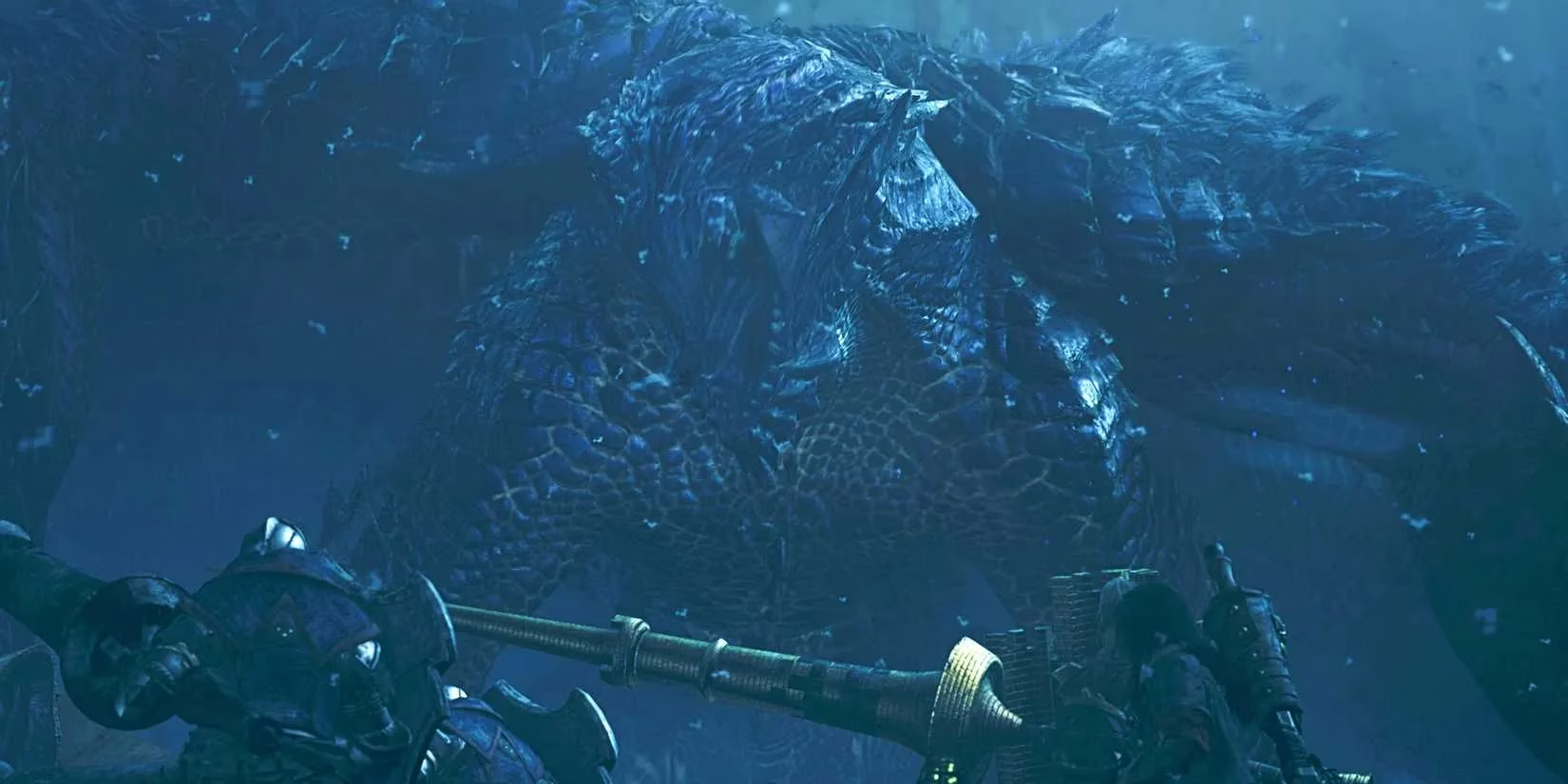
Some hunters blamed the Iceshard Cliffs entirely for the original mess, and I get it. Those narrow, vertical spaces feel oppressive. But honestly? I hope Capcom doesn't overcorrect. The Cliffs brought something rare to Wilds: genuine claustrophobia in a game that otherwise offers sprawling, beautiful vistas like the Windward Plains and Scarlet Forest. Variety matters. Back in the dusty days of Monster Hunter 2, there was a desert zone that was as vast as it was empty—a massive, barren stretch that made every hunt in it feel epic and desolate. That zone stood out because all the others were compartmentalized little arenas separated by loading screens. In a similar but inverted way, the Iceshard Cliffs' cramped ruins create a feeling no other locale in Wilds can match. Fighting a Gore Magala on a single bridge, with a frozen abyss on both sides, is an experience. It's intense, claustrophobic fun, and with the camera behaving itself now, that experience finally shines properly.
What really impresses me is how fast Capcom moved. Monster Hunter games have always had their little camera hiccups—any hunter who clawed their way through the old 3DS titles remembers the nightmare of fighting giant monsters while also wrestling the camera. What's different here is the responsiveness. Within a single month, the team identified the pain point, tweaked the numbers, and delivered a fix that doesn't just band-aid the problem but genuinely restores Gore Magala to the status of a fair, exhilarating opponent. It's a small technical adjustment with a huge impact, and it gives me a ton of hope for the game's future. If they're willing to polish the experience this carefully, future title updates are going to be incredible.
Now, I find myself actively hunting Gore Magala again—not for a rare mantle, not for layered armor, but simply because the fight is fun. That's the highest praise I can give a Monster Hunter encounter. The sweeping wings, the dark Frenzy transformation, the way the entire soundtrack seems to hush when it enters that final phase—it all lands perfectly when you can actually see it. I'm bringing traps, I'm packing Demondrugs, and I'm genuinely excited to cart a few times learning new weapon matchups against this monster. That's the Monster Hunter I fell in love with, and I'm so glad it's back.
So next time you're scrolling through patch notes and you see a tiny line about camera distance, don't skip past it. Those little changes can resurrect a hunt. Gore Magala is proof.
Expert commentary is drawn from UNESCO Games in Education, and it usefully frames why seemingly “small” usability fixes—like Monster Hunter Wilds’ camera-distance tweak for Gore Magala—can have outsized effects on learning and performance. When the view stops clipping in tight arenas like the Iceshard Cliffs, hunters can reliably read tells, practice positioning, and iterate on mistakes, restoring the deliberate skill-building loop that makes mastering a fight feel earned rather than random.